

Secure Your Fence with ground anchors for Long-Term Stability
Industry Background and Market Demand
Fencing systems are critical for property security, livestock management, and boundary demarcation. However, long-term stability remains a challenge due to soil erosion, wind loads, and freeze-thaw cycles. Traditional installation methods—such as burying posts in concrete—often fail under extreme conditions, leading to costly repairs.
The demand for reliable anchoring solutions has grown, particularly in agriculture, construction, and industrial sectors. Ground anchors offer a robust alternative by transferring structural loads deeper into the soil, reducing movement and prolonging fence lifespan. This shift is driven by stricter building codes, insurance requirements, and the need for low-maintenance infrastructure.
Core Concept: How Ground Anchors Work
Ground anchors (also called earth anchors or screw anchors) stabilize fences by resisting uplift and lateral forces. Unlike surface-mounted supports, they penetrate below the frost line, where soil compaction is higher. Their helical or plate designs increase surface contact with the earth, distributing weight more effectively.
Key mechanisms include:
- Tension resistance: Anchors counteract upward forces from wind or shifting soil.
- Shear resistance: Lateral stability prevents leaning or collapse.
- Corrosion resistance: Materials like galvanized steel or powder-coated alloys ensure durability in harsh environments.
Product Structure, Materials, and Manufacturing
1. Design Variations
- Helical Anchors: Screw-like shafts with one or more helical plates, ideal for cohesive soils.
- Plate Anchors: Flat or angled plates attached to a shaft, suitable for sandy or loose soils.
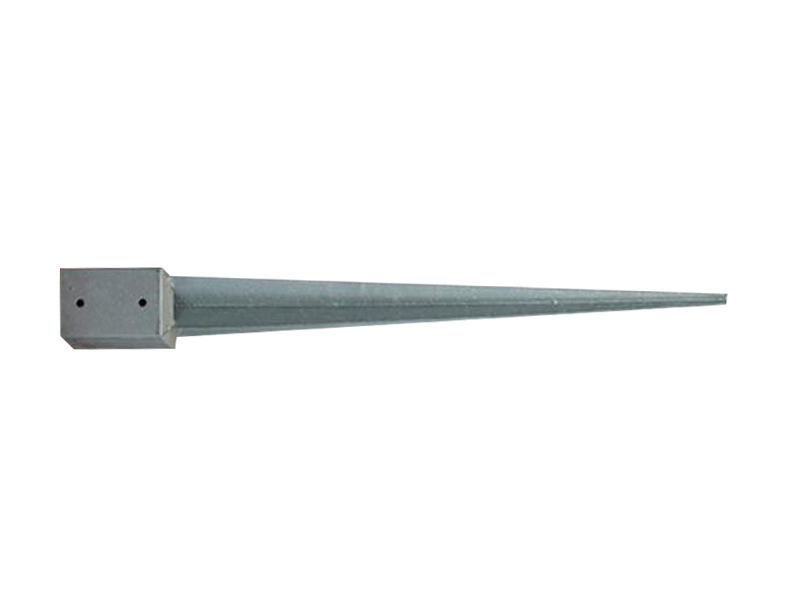
- Drive Anchors: Pointed tips for direct driving into compacted ground.
2. Material Selection
- Hot-dip galvanized steel: Standard for corrosion resistance in wet or saline conditions.
- Stainless steel: Used in coastal or chemically aggressive environments.
- Composite materials: Lightweight options for temporary fencing.
3. Manufacturing Process
High-quality anchors undergo precision cutting, welding, and coating. Helical plates are cold-formed to maintain structural integrity, while automated galvanizing ensures uniform protection.
Factors Affecting Performance
1. Soil Type
- Clay soils require wider helices for better grip.
- Sandy soils need deeper installation to prevent pull-out.
2. Installation Depth
Anchors must extend below the frost line (typically 12–48 inches, depending on region) to avoid seasonal movement.
3. Load Capacity
Engineers calculate required holding power based on fence height, wind exposure, and expected loads (e.g., livestock pressure).
4. Corrosion Protection
Coatings must match environmental conditions—e.g., epoxy for industrial sites, zinc-aluminum for coastal areas.
Supplier Selection Criteria
When sourcing ground anchors, consider:
- Certifications: ISO 9001, ASTM F1554 (material standards).
- Testing data: Pull-out resistance and fatigue life under simulated conditions.
- Customization: Ability to modify shaft length or plate configuration for unique projects.
- Lead times and logistics: Suppliers with regional warehouses reduce shipping costs.
Common Challenges and Solutions
1. Poor Soil Conditions
- Solution: Use hybrid anchors (e.g., helical-plate combinations) or soil stabilizers like bentonite grout.
2. Frost Heave
- Solution: Install anchors deeper than the local frost line and use flexible couplings.
3. Corrosion in Coastal Areas
- Solution: Specify 316-grade stainless steel or double-layer coatings.
Applications and Case Studies
1. Agricultural Fencing
A Midwest cattle farm reduced post replacements by 70% after switching to helical anchors, which withstood heavy animal contact and winter ground shifts.
2. Temporary Event Barriers
A European festival organizer used lightweight composite anchors to secure crowd-control fences on grass fields, enabling quick removal without turf damage.
3. Industrial Security Fencing
A chemical plant in Texas installed stainless steel anchors to prevent corrosion from acidic runoff, extending fence life to 15+ years.
Trends and Future Developments
1. Smart Anchors
Sensors embedded in anchors could monitor tension and soil movement, alerting maintenance teams via IoT platforms.
2. Eco-Friendly Materials
Recycled steel and biodegradable coatings are gaining traction among sustainability-focused buyers.
3. Modular Systems
Interchangeable anchor heads allow adaptability across soil types, reducing inventory costs.
FAQ
Q: How do I determine the right anchor size for my fence?
A: Consult an engineer to evaluate soil composition, fence height, and expected loads. Most suppliers provide load charts for standard configurations.
Q: Can ground anchors be reused?
A: Helical anchors can often be unscrewed and reinstalled, but drive anchors may deform upon removal.
Q: Do anchors work in rocky terrain?
A: Specialized rock anchors with carbide tips are available, though pre-drilling may be necessary.
Q: How long do galvanized anchors last?
A: In moderate climates, 20–30 years; coastal areas may require stainless steel for similar longevity.
Conclusion
Ground anchors are a cost-effective solution for enhancing fence stability across industries. By selecting the right design, material, and installation method, businesses can minimize maintenance and maximize ROI. As technology advances, integration with smart systems and sustainable materials will further redefine fencing standards.
(Word count: 1,280)
Cangzhou Yangkang is a professional supplier in the photovoltaic and infrastructure fields, focusing on the R&D and production of Ground screws (helical ground anchors), Photovoltaic (PV) Mounting Systems, Bolts, Fence caps, Wire Mesh and other products.

About


Copyright © 2022 Cangzhou Yangkang Trading Co., Ltd
SitemapMain business area: Huanghua Cangzhou CHINA
This website uses cookies to ensure you get the best experience on our website.



 Phone
Phone
Comment
(0)