

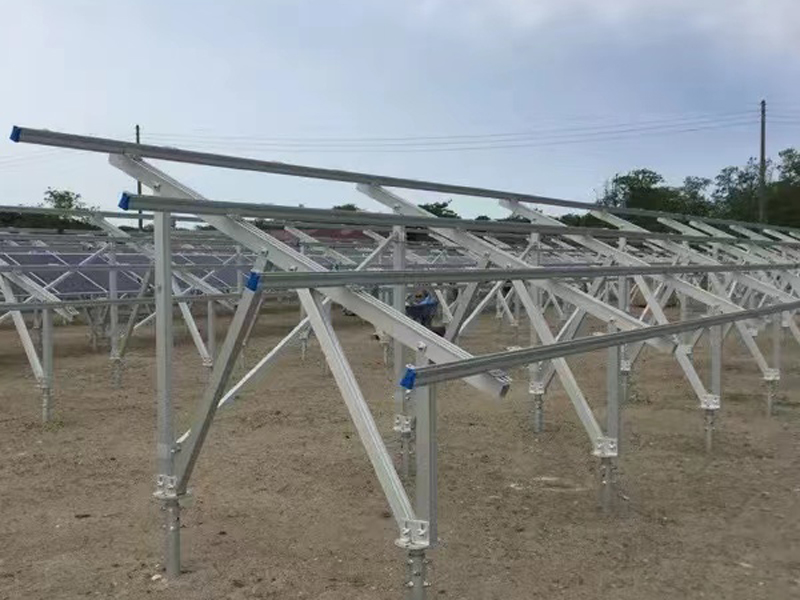
How to Use ground screws for a Reliable and Sustainable Foundation
Industry Background and Market Demand
The construction industry is increasingly prioritizing sustainable and efficient foundation solutions. Traditional concrete foundations, while robust, require extensive excavation, curing time, and generate significant carbon emissions. In contrast, ground screws—also known as Screw piles or helical piles—offer a faster, more environmentally friendly alternative.
Market demand for ground screws has grown due to their adaptability in various soil conditions, reduced installation time, and minimal environmental disruption. They are widely used in residential, commercial, and industrial projects, particularly for solar farms, modular buildings, and temporary structures. Regulatory pressures to reduce construction waste and carbon footprints further drive adoption.
Core Concept and Key Technology
Ground screws are steel shafts with helical plates welded at the base, designed to be mechanically screwed into the ground. The helical plates provide load-bearing capacity by displacing soil rather than removing it, ensuring stability. Unlike driven piles, ground screws minimize vibration and noise, making them suitable for urban and sensitive environments.
The installation process involves rotating the screw into the soil using hydraulic machinery. Torque monitoring ensures proper depth and load capacity, eliminating guesswork. This method avoids the need for curing, allowing immediate load application—a significant advantage over concrete.
Product Structure, Materials, and Manufacturing
Ground screws consist of three primary components:
1. Shaft: High-strength steel (typically galvanized or coated for corrosion resistance).
2. Helical Plates: One or multiple plates welded at the base to enhance load distribution.
3. Drive Head: Connects to installation equipment and supports the structure above.
Manufacturing involves precision welding and quality control to ensure structural integrity. Hot-dip galvanizing or epoxy coatings protect against soil corrosion, extending lifespan to 50+ years.
Key Factors Affecting Performance
1. Soil Conditions: Screws perform best in cohesive or granular soils but may require pre-drilling in rocky terrain.
2. Load Requirements: Helical plate size and shaft diameter must match expected vertical and lateral loads.
3. Installation Accuracy: Proper torque calibration prevents over- or under-installation.
4. Corrosion Protection: Coatings must suit soil pH and moisture levels.
Supplier Selection and Supply Chain
Reliable suppliers should offer:
- Certified Materials: ISO-compliant steel and corrosion protection.
- Customization: Adaptable designs for varying project needs.
- Technical Support: Soil analysis and load calculation assistance.
Supply chain disruptions can affect lead times, so partnering with local or diversified suppliers mitigates risks.
Common Challenges and Industry Pain Points
1. Misapplication: Using undersized screws in unstable soils leads to settlement.
2. Improper Installation: Lack of torque monitoring compromises stability.
3. Regulatory Hurdles: Some regions lack standards for screw pile foundations, requiring case-by-case approvals.
Applications and Case Studies
Solar Farms
Ground screws provide a cost-effective foundation for solar panels, reducing installation time by up to 70% compared to concrete. A 20 MW solar project in Germany used 10,000 screws, completing installation in three weeks.
Modular Housing
In flood-prone areas, screw piles elevate structures above water levels. A UK developer achieved a 30% cost reduction using ground screws for 50 modular homes.
Temporary Structures
Event stages and military installations benefit from quick installation and removal without soil damage.
Current Trends and Future Outlook
1. Hybrid Systems: Combining screws with small concrete footings for heavy loads.
2. Automated Installation: Robotics and AI-assisted torque monitoring improve precision.
3. Recyclable Designs: Manufacturers are exploring reusable screws for circular economy compliance.
FAQ
Q: How deep should ground screws be installed?
A: Depth depends on soil and load requirements, typically 1.5–5 meters. Torque testing confirms stability.
Q: Can screws be removed and reused?
A: Yes, though reuse depends on soil conditions and structural integrity post-extraction.
Q: Are ground screws suitable for seismic zones?
A: Properly designed screws with lateral bracing can perform well in low-to-moderate seismic areas.
Conclusion
Ground screws offer a reliable, sustainable foundation solution with clear advantages in speed, cost, and environmental impact. As technology and standards evolve, their adoption will expand across industries, reshaping modern construction practices.
Cangzhou Yangkang is a professional supplier in the photovoltaic and infrastructure fields, focusing on the R&D and production of Ground screws (helical ground anchors), Photovoltaic (PV) Mounting Systems, Bolts, Fence caps, Wire Mesh and other products.

About


Copyright © 2022 Cangzhou Yangkang Trading Co., Ltd
SitemapMain business area: Huanghua Cangzhou CHINA
This website uses cookies to ensure you get the best experience on our website.



 Phone
Phone
Comment
(0)