

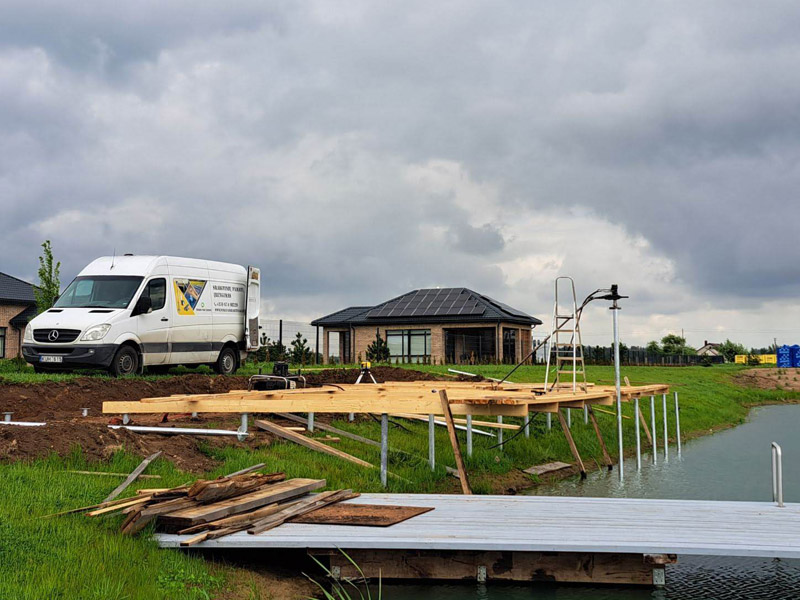
How to Install a ground screw Foundation in Minutes
Industry Background and Market Demand
ground screw foundations have gained traction in construction and renewable energy sectors due to their speed of installation, minimal environmental impact, and cost efficiency. Unlike traditional concrete foundations, which require extensive excavation and curing time, ground screws provide immediate load-bearing capacity, making them ideal for temporary structures, solar panel arrays, and modular buildings.
The demand for rapid, low-disruption foundation solutions has grown with the rise of off-grid installations, disaster relief housing, and sustainable infrastructure. In Europe and North America, regulatory support for green construction has further accelerated adoption. Ground screws eliminate the need for heavy machinery in many cases, reducing both labor costs and carbon emissions.
Core Concept and Key Technology
A ground screw foundation consists of a steel shaft with helical plates welded along its length. The screw is mechanically driven into the ground using hydraulic or electric torque motors, displacing soil rather than removing it. The helical plates provide stability by compacting the soil while distributing vertical and lateral loads.
Key advantages include:
- No curing time: Immediate load capacity after installation.
- Adjustability: Screws can be extended or realigned if needed.
- Reusability: Suitable for temporary structures, as screws can be unscrewed and reused.
Product Structure and Manufacturing
Materials
High-strength steel (typically S355 or higher) with hot-dip galvanizing (ISO 1461 standard) ensures corrosion resistance. Thicker helical plates (6–12 mm) improve load capacity in dense soils.
Manufacturing Process
1. Cutting & Forming: Steel coils are cut and pressed into helical shapes.
2. Welding: Automated submerged arc welding (SAW) ensures consistent plate attachment.
3. Galvanizing: Screws are dipped in molten zinc at 450°C for long-term durability.
Critical Factors Affecting Performance
1. Soil Conditions
- Cohesive soils (clay) require narrower helices to reduce installation torque.
- Granular soils (sand/gravel) need larger plates for better anchorage.
2. Installation Torque
- Correlates directly with load capacity. A torque-to-capacity ratio (e.g., 10 Nm = 1 kN) is used for verification.
3. Corrosion Protection
- Additional epoxy coatings may be required in acidic or saline environments.
Supplier Selection Criteria
For B2B buyers, key considerations include:
- Certifications: ISO 9001, CE marking, or local engineering standards (e.g., DIN 1054 in Germany).
- Testing Data: Third-party reports on pull-out resistance and fatigue life.
- Customization: Ability to modify shaft length, helix diameter, or thread pitch for specific projects.
Common Challenges and Solutions
Problem: Screw refusal in rocky soils.
Solution: Pre-drilling pilot holes or using sacrificial drill bits.
Problem: Lateral instability in loose topsoil.
Solution: Adding cross-braces or increasing embedment depth.
Applications and Case Studies
1. Solar Farms
- A 50 MW project in Spain reduced installation time by 70% using ground screws versus concrete.
2. Modular Housing
- Temporary shelters in flood-prone regions use screw foundations for quick deployment and removal.
3. Boardwalks
- Protected wetlands in Canada employ ground screws to avoid soil disturbance.
Trends and Future Developments
1. Automated Installation
- Robotics and GPS-guided drivers are being tested for large-scale solar projects.
2. Hybrid Systems
- Combining screws with small concrete footings for ultra-high loads (>500 kN).
3. Smart Monitoring
- IoT-enabled screws with strain gauges to detect settling or overloading.
FAQ
Q: How deep should ground screws be installed?
A: Minimum depth is 1.2 m to bypass frost lines in temperate climates, but load requirements may dictate deeper placement.
Q: Can screws be removed and reused?
A: Yes, though galvanizing damage should be inspected before redeployment.
Q: What’s the lifespan of a ground screw foundation?
A: Properly galvanized screws last 50+ years in non-aggressive soils.
Conclusion
Ground screw foundations offer a faster, greener alternative to conventional methods. By understanding soil mechanics, torque requirements, and supplier qualifications, engineers can deploy these systems efficiently. As automation and material science advance, their role in construction will expand further.
(Word count: 1,280)
Cangzhou Yangkang is a professional supplier in the photovoltaic and infrastructure fields, focusing on the R&D and production of Ground screws (helical ground anchors), Photovoltaic (PV) Mounting Systems, Bolts, Fence caps, Wire Mesh and other products.

About


Copyright © 2022 Cangzhou Yangkang Trading Co., Ltd
SitemapMain business area: Huanghua Cangzhou CHINA
This website uses cookies to ensure you get the best experience on our website.



 Phone
Phone
Comment
(0)