

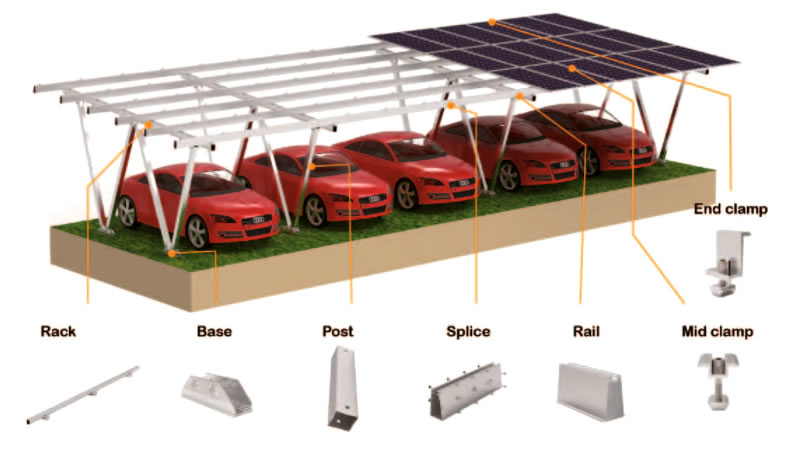
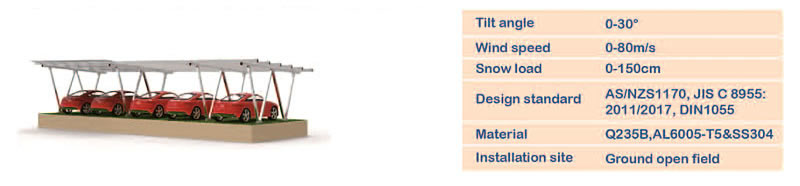
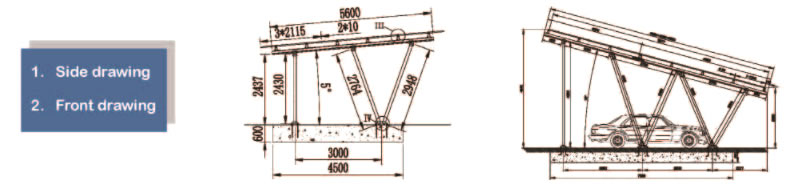
A Solar carport structure is a hybrid solution that combines a carport with solar power generation capabilities. These structures provide covered parking for vehicles while simultaneously capturing solar energy through installed photovoltaic (PV) panels. Solar carports are designed to be durable, functional, and sustainable, making them an ideal addition for residential, commercial, and public spaces.
Solar carports are increasingly popular as they provide an innovative way to harness the sun's energy without requiring additional space for solar panel installations. They are particularly valuable in areas where land is scarce or when parking lots are already built, offering a multi-purpose structure that serves as both a shelter and a power generator.
This product description will explore the benefits of solar carport structures, the types of solar carports available, their applications, and the installation process. By the end of this guide, you will have a comprehensive understanding of how solar carports can enhance both the functionality and sustainability of any space.
Dual Functionality: Parking and Solar Power Generation
The most significant benefit of solar carports is their ability to combine two functions in one structure: vehicle parking and solar energy production. Solar panels installed on the roof of the carport harness sunlight to generate electricity, while the carport itself provides shelter for cars, trucks, or other vehicles. This dual functionality makes solar carports an excellent use of otherwise underutilized space, such as parking lots or driveways.
Energy Efficiency and Cost Savings
Solar carports help reduce electricity costs by converting sunlight into power. The generated electricity can be used to power homes, businesses, or electric vehicles. In addition to saving money on electricity bills, solar carports can often provide access to tax incentives or rebates, making the initial investment more affordable. Businesses can benefit from reduced energy costs and improved sustainability, while homeowners enjoy the long-term savings associated with renewable energy.
Eco-Friendly and Sustainable
Solar carports contribute to reducing the carbon footprint of both residential and commercial spaces. By generating clean, renewable energy from the sun, solar carports help reduce dependence on fossil fuels, contributing to a cleaner, greener environment. With rising concerns about climate change and the need to transition to more sustainable energy solutions, solar carports are a timely and eco-friendly choice.
Protection for Vehicles
In addition to the environmental and energy benefits, solar carports also provide essential protection for parked vehicles. These structures offer shelter from harsh weather conditions such as rain, hail, snow, and intense sunlight. This protection helps preserve the vehicle’s paintwork and interior, reducing wear and tear caused by weather exposure. Furthermore, solar carports can be designed to include features such as EV charging stations, making them ideal for electric vehicles (EVs) and providing additional value to owners.
Increased Property Value
Installing a solar carport can increase the value of a property, making it more attractive to potential buyers. Solar power systems are highly sought after due to the growing demand for energy-efficient, sustainable homes and commercial properties. By adding a solar carport to your property, you can enhance its market appeal while offering the added benefits of energy production and vehicle protection.
Low Maintenance
Solar carports require minimal maintenance once installed. The panels are designed to withstand outdoor elements, and the carport structure itself is typically made from durable materials such as galvanized steel or aluminum. Regular cleaning of the solar panels and occasional checks on the electrical systems are usually all that's needed to keep the system operating efficiently.
There are several different types of solar carport structures designed to meet various needs and applications. The choice of carport depends on factors such as the number of vehicles to be accommodated, available space, and the desired aesthetic. Below are the most common types:
Single-Sided Solar Carports
Single-sided solar carports are typically installed in parking lots or driveways, with a single row of vehicles parked underneath the solar-covered roof. These structures are often used for smaller spaces and can be designed to cover one or more rows of cars. The single-sided design provides flexibility in terms of space usage and is a popular choice for residential and smaller commercial installations.
Double-Sided Solar Carports
Double-sided solar carports are larger structures that provide coverage for vehicles parked on both sides of the carport. These are ideal for larger parking lots or areas where there is more space available. Double-sided carports offer more solar panel capacity, meaning they can generate more electricity and provide greater protection for more vehicles.
Cantilevered Solar Carports
Cantilevered solar carports are a modern, sleek design where the carport structure is supported at only one end, creating a dramatic overhang that provides shelter for vehicles. This design is often used for aesthetic purposes, offering a more open and visually appealing solution. Cantilevered solar carports are ideal for installations where style and functionality need to be balanced.
Solar Carport with EV Charging Stations
Many solar carports can be customized to include electric vehicle (EV) charging stations. This feature is particularly beneficial for businesses or homeowners with electric vehicles. By adding charging stations to the carport, users can charge their EVs directly from the solar power generated by the panels, creating a fully sustainable energy solution for their parking and transportation needs.
Standalone Solar Carports
Standalone solar carports are freestanding structures that do not rely on existing buildings for support. These carports are ideal for open areas such as parking lots, driveways, or rural locations. They can be designed to accommodate various numbers of vehicles and can be customized to fit the specific needs of the property owner.
Solar carports are versatile structures with a wide range of applications, catering to both residential and commercial needs. Here are some of the most common applications of solar carports:
Residential Use
Homeowners can install solar carports in their driveways to protect their vehicles while generating renewable energy for their homes. Solar carports provide an excellent alternative to traditional rooftop solar panel installations, particularly for those with limited roof space or shaded areas. The electricity generated can be used to power appliances, lighting, and even charge electric vehicles, contributing to overall energy savings.
Commercial and Public Use
Businesses and public spaces such as shopping centers, schools, and government buildings can install solar carports to provide shaded parking while generating clean energy. By using the power generated from the solar panels, businesses can reduce energy costs, enhance their sustainability efforts, and even promote their eco-friendly initiatives to customers and employees.
Electric Vehicle (EV) Charging Stations
As the adoption of electric vehicles increases, solar carports with integrated EV charging stations are becoming a popular choice. These carports offer the convenience of charging electric vehicles using solar energy, providing an entirely self-sustaining solution for businesses and individuals. The combination of solar power generation and EV charging is a powerful way to promote clean transportation.
Government and Institutional Projects
Government buildings and institutions are increasingly turning to solar carports as part of their efforts to reduce energy consumption and increase sustainability. Solar carports installed in public spaces can provide shade for vehicles while also helping the government meet renewable energy targets. These projects are often funded through green initiatives and may be eligible for grants or incentives.
Hospitality Industry
Hotels, resorts, and other hospitality businesses can benefit from solar carports by providing covered parking for guests and reducing operational energy costs. Solar carports enhance the appeal of these establishments by aligning them with sustainability trends, while also offering energy savings that can improve the hotel's bottom line.
The installation of solar carport structures typically follows a straightforward process, though it does require careful planning to ensure optimal performance. Here's an overview of the installation process:
Site Assessment and Planning
Before installation begins, a site assessment is necessary to evaluate factors such as available space, sun exposure, and the number of vehicles to be accommodated. The type of solar carport (single-sided, double-sided, etc.) will depend on these factors. Professional engineers will calculate the optimal size and configuration for the carport, ensuring that the solar panels will receive adequate sunlight for maximum energy generation.
Design and Permitting
Once the site assessment is complete, the next step is to design the solar carport structure. This includes choosing the appropriate materials for the carport (e.g., galvanized steel or aluminum) and determining the layout of the solar panels. Permitting will be required, as local building codes and regulations must be followed.
Foundation and Structure Installation
The foundation of the solar carport is then installed, typically involving concrete footings or ground anchors. Once the foundation is set, the carport structure is erected. The frame is built, and the solar panel mounts are attached.
Solar Panel Installation
Once the frame is in place, the solar panels are installed on the roof of the carport. The panels are securely mounted, ensuring that they are at the optimal angle to capture sunlight. Wiring and electrical connections are then made, allowing the solar panels to be connected to the power system.
Final Inspection and Commissioning
After installation, a final inspection is conducted to ensure that all components are securely in place and that the solar carport is operating correctly. Once everything is verified, the system is commissioned and begins generating power.
Solar carports offer an innovative and eco-friendly solution to the challenges of parking and energy.
Cangzhou Yangkang is a professional supplier in the photovoltaic and infrastructure fields, focusing on the R&D and production of Ground screws (helical ground anchors), Photovoltaic (PV) Mounting Systems, Bolts, Fence caps, Wire Mesh and other products.

About


Copyright © 2022 Cangzhou Yangkang Trading Co., Ltd
SitemapMain business area: Huanghua Cangzhou CHINA
This website uses cookies to ensure you get the best experience on our website.



 Phone
Phone