

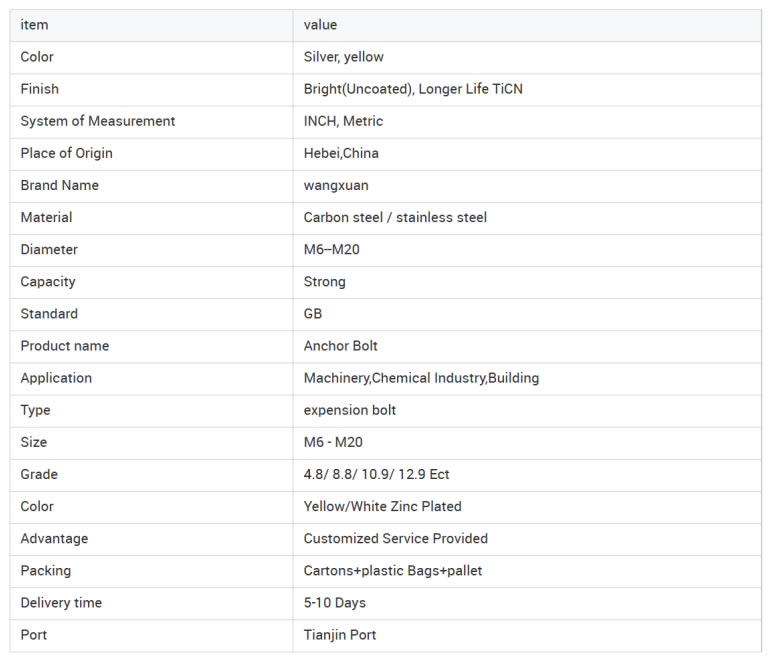
An expansion Bolt is a specialized fastener used to securely anchor objects to solid substrates such as concrete, brick, or stone. These bolts are essential for providing stability and support in a wide range of applications, from construction projects to heavy-duty machinery installations. Designed to provide a robust and reliable hold, Expansion Bolts are frequently used in both residential and industrial settings.
Expansion bolts are commonly used in situations where traditional fastening methods like screws or nails would not suffice. They offer a unique mechanism that allows them to expand and create a tight grip inside the substrate, ensuring a long-lasting hold. Whether you’re anchoring structural beams, securing machinery, or installing fixtures, expansion bolts are a go-to choice for reliable fastening.
This comprehensive guide will delve into the different types of expansion bolts, their benefits, installation techniques, applications, and considerations for choosing the right expansion bolt for your needs.
High Load-Bearing Capacity
Expansion bolts are designed to support heavy loads, making them ideal for use in construction and industrial applications. Unlike standard fasteners, which may pull out or loosen over time, expansion bolts expand inside the hole to create a strong, friction-based hold. This provides a much higher load-bearing capacity, making them suitable for securing heavy equipment, structural elements, and other materials that require extra strength.
Versatility
Expansion bolts can be used in a wide variety of materials, including concrete, brick, and stone. This versatility makes them an excellent choice for a wide range of applications, from securing heavy machinery in factories to attaching shelving units to walls in residential buildings. They can also be used in both indoor and outdoor settings, providing reliable fastening in any environment.
Easy Installation
One of the key advantages of expansion bolts is their ease of installation. Unlike traditional fasteners that require pre-drilled holes or anchors, expansion bolts can be installed quickly and efficiently with minimal effort. The expansion mechanism ensures a secure fit, and once the bolt is tightened, it will hold firmly in place. This ease of use reduces installation time and labor costs.
Permanent and Reliable Hold
Expansion bolts provide a permanent hold, which means that once installed, they will remain secure for the life of the structure. This is particularly beneficial in applications where regular maintenance or re-tightening of fasteners is not feasible. The expansion mechanism locks the bolt in place, ensuring that it won’t loosen or shift over time.
Corrosion-Resistant Options
Expansion bolts are available in materials that are resistant to corrosion, including galvanized steel, stainless steel, and other weather-resistant coatings. This makes them suitable for outdoor applications where exposure to moisture and other elements could cause traditional fasteners to rust or degrade over time.
Expansion bolts come in various types, each designed to cater to specific applications. Below are the most common types of expansion bolts and their characteristics:
Wedge expansion bolts are one of the most widely used types of expansion bolts. They feature a cone-shaped wedge that is placed inside a cylindrical sleeve. As the bolt is tightened, the wedge moves upward, expanding the sleeve against the walls of the hole. This provides a strong, reliable hold that is ideal for heavy-duty applications. Wedge expansion bolts are commonly used in concrete or masonry installations.
Best for: Concrete, brick, and stone applications
Load-bearing capacity: High
Advantages: High load-bearing capacity, suitable for heavy-duty applications
Disadvantages: Requires precise hole drilling
Sleeve expansion bolts consist of a metal sleeve that expands when the bolt is tightened. These bolts are used when a secure anchor is needed, but the material being fastened is not as solid as concrete. Sleeve expansion bolts are often used in wood, metal, or other softer materials. When tightened, the sleeve expands inside the hole, providing a strong grip.
Best for: Wood, metal, and softer materials
Load-bearing capacity: Moderate to high
Advantages: Versatile, can be used in softer materials
Disadvantages: May not be as strong as wedge bolts in concrete applications
Drop-In Expansion Bolts
Drop-in expansion bolts are designed to be installed in pre-drilled holes. They are ideal for use in hollow concrete or masonry blocks where traditional anchors may not be effective. Drop-in bolts are inserted into the hole, and as the bolt is tightened, the internal mechanism expands to create a strong bond with the material.
Best for: Hollow concrete or masonry blocks
Load-bearing capacity: Moderate
Advantages: Ideal for hollow blocks, quick installation
Disadvantages: Limited to specific materials
Heavy Duty Expansion Bolts
Heavy-duty expansion bolts are larger and more robust than standard expansion bolts, making them suitable for high-load applications. These bolts are commonly used in large-scale industrial projects where maximum strength and durability are required. Heavy-duty expansion bolts often feature additional reinforcement, such as thicker sleeves or multiple expansion mechanisms, to provide superior strength.
Best for: Large-scale industrial and commercial projects
Load-bearing capacity: Very high
Advantages: Maximum strength and durability, suitable for demanding applications
Disadvantages: Requires larger drill holes, more expensive
Through Bolt Expansion Bolts
Through bolt expansion bolts are used when the bolt needs to pass completely through the material being fastened. This type of expansion bolt creates a solid connection by expanding at both ends of the hole. It is ideal for applications where a strong and secure fastening is required, such as securing structural beams or machinery.
Best for: Structural applications, machinery installations
Load-bearing capacity: High
Advantages: Creates a strong, secure hold at both ends of the hole
Disadvantages: Requires through holes, more complex installation
Expansion bolts are used in a wide variety of industries and applications due to their versatility and high load-bearing capacity. Below are some of the most common uses for expansion bolts:
Construction and Structural Applications
In the construction industry, expansion bolts are often used to secure structural elements, such as beams, columns, and frames. They provide the strength and reliability required to hold heavy building materials in place. Wedge expansion bolts are particularly popular in this field due to their high load-bearing capacity.
Machinery and Equipment Installation
Expansion bolts are commonly used to install machinery and equipment in factories, warehouses, and other industrial settings. These bolts provide a secure fastening solution for large, heavy machines that must remain stable and firmly anchored during operation.
Shelving and Storage Installations
For both residential and commercial storage solutions, expansion bolts are often used to secure shelves, racks, and cabinets to walls. This ensures that the storage units remain firmly in place, even when loaded with heavy items.
Outdoor and Environmental Applications
Due to their corrosion-resistant options, expansion bolts are suitable for outdoor use in harsh environments. They are often used in the installation of outdoor structures, such as fences, poles, and signs. Galvanized or stainless steel expansion bolts are ideal for these applications.
Signage and Lighting Installations
Expansion bolts are frequently used in the installation of large signs, billboards, and streetlights. These installations require a strong hold to ensure that the signs and lights remain secure in outdoor conditions, often subject to wind and weather.
Installing expansion bolts is relatively simple, but it requires careful attention to detail to ensure a secure and stable hold. Below are the steps involved in installing an expansion bolt:
Drilling the Hole
Begin by drilling a hole into the material where you intend to install the bolt. The hole diameter and depth should match the specifications of the expansion bolt you are using. Make sure the hole is clean and free of debris before proceeding.
Inserting the Bolt
Once the hole is drilled, insert the expansion bolt into the hole. For wedge expansion bolts, ensure the wedge is properly positioned. For sleeve bolts or drop-in bolts, ensure the sleeve or internal mechanism is aligned correctly.
Tightening the Bolt
Use the appropriate tool to tighten the bolt. As you tighten the bolt, the expansion mechanism will activate, causing the bolt to expand inside the hole and create a firm hold. Continue tightening until the bolt is fully secure.
Checking for Security
Once the bolt is tightened, check to ensure it is firmly in place. The installation should be secure with no movement or loosening of the bolt. If necessary, perform a final tightening to ensure a stable hold.
When selecting an expansion bolt for your project, consider the following factors:
Material Type
Choose an expansion bolt that is suitable for the material you are working with. Some expansion bolts are designed specifically for concrete, while others are better suited for softer materials like wood or metal.
Load-Bearing Requirements
Consider the weight and load that the bolt will need to support. If the application requires supporting heavy machinery or large structural elements, opt for heavy-duty expansion bolts with high load-bearing capacity.
Environmental Conditions
If the installation site is exposed to outdoor elements or harsh conditions, select expansion bolts made from corrosion-resistant materials like galvanized or stainless
Cangzhou Yangkang is a professional supplier in the photovoltaic and infrastructure fields, focusing on the R&D and production of Ground screws (helical ground anchors), Photovoltaic (PV) Mounting Systems, Bolts, Fence caps, Wire Mesh and other products.

About


Copyright © 2022 Cangzhou Yangkang Trading Co., Ltd
SitemapMain business area: Huanghua Cangzhou CHINA
This website uses cookies to ensure you get the best experience on our website.



 Phone
Phone