

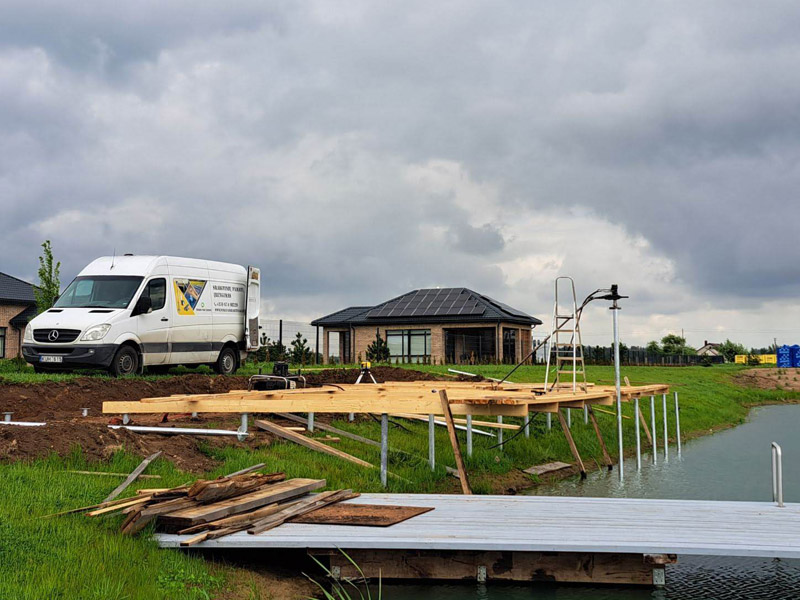
Improving Fence Stability with ground screw Anchors
Industry Background and Market Demand
Fence stability has long been a critical concern in construction, agriculture, and infrastructure projects. Traditional methods, such as concrete footings or driven posts, often face challenges like soil erosion, frost heave, and labor-intensive installation. As industries prioritize faster deployment, cost efficiency, and environmental sustainability, ground screw anchors have emerged as a reliable alternative.
The demand for ground screw anchors is driven by their adaptability to various soil conditions, reduced environmental impact, and reusability. Unlike concrete, which requires curing time and permanent excavation, screw anchors provide immediate load-bearing capacity with minimal site disruption. This makes them particularly valuable in temporary fencing for events, solar farms, and agricultural enclosures where flexibility is essential.
Core Concept: How Ground Screw Anchors Work
Ground screw anchors, also called helical piles or Screw piles, are steel shafts with helical plates welded at the base. They are mechanically screwed into the ground, displacing soil rather than removing it, which enhances lateral and vertical stability. The helical design increases surface contact with the soil, distributing load evenly and resisting uplift forces from wind or lateral pressure.
Key advantages include:
- No curing time: Immediate load-bearing capacity after installation.
- Adjustability: Anchors can be unscrewed and repositioned if needed.
- Minimal site disturbance: No excavation or concrete waste.
Product Structure and Manufacturing
A typical ground screw anchor consists of:
- High-strength steel shaft: Usually galvanized or powder-coated for corrosion resistance.
- Helical plates: Spiral-shaped flanges that determine load capacity based on diameter and pitch.
- Drive head: Compatible with hydraulic or handheld torque equipment for installation.
Manufacturing involves precision laser cutting for helical plates, robotic welding for consistency, and rigorous quality control to meet structural standards (e.g., ASTM or EN ISO). Some manufacturers offer custom designs for specialized soils, such as rocky or sandy terrain.
Factors Affecting Performance
1. Soil Composition: Clay, sand, and gravel require different helix configurations. A single-helix design may suffice for cohesive soils, while loose soils need multi-helix anchors for better grip.
2. Installation Torque: Correlates directly with load capacity. Under-torquing risks instability; over-torquing may damage the shaft.
3. Corrosion Protection: Hot-dip galvanizing or epoxy coatings extend lifespan in corrosive environments (e.g., coastal areas).
4. Load Requirements: Fences in high-wind zones need deeper anchors with larger helices to counteract uplift forces.
Supplier Selection Criteria
For B2B buyers, evaluating suppliers involves:
- Certifications: Compliance with international standards (e.g., ISO 9001).
- Material traceability: Mill certificates for steel quality.
- Customization: Ability to modify helix size, shaft length, or coating.
- Technical support: Soil analysis tools and installation guidance.
Common Challenges and Solutions
Problem: Anchors loosen over time in expansive soils.
Solution: Use multi-helix designs or post-installation grouting for added stability.
Problem: Misalignment during installation.
Solution: Pilot holes or laser-guided equipment ensure vertical placement.
Applications and Case Studies
- Solar Farms: A U.S. solar project reduced installation time by 40% using ground screws for perimeter fencing, avoiding concrete delays.
- Temporary Events: Music festivals in Europe deploy reusable screw anchors for crowd-control barriers, cutting waste and labor costs.
- Agriculture: Vineyards in Australia switched to screw anchors to withstand soil shifts caused by irrigation cycles.
Trends and Future Developments
1. Smart Anchors: Sensors embedded in shafts to monitor load and soil movement in real time.
2. Eco-Materials: Recycled steel and biodegradable coatings to reduce carbon footprint.
3. Automated Installation: Robotics for large-scale projects to improve precision and speed.
FAQ
Q: Can screw anchors be used in frozen ground?
A: Yes, but pre-drilling may be necessary in permafrost to avoid shaft deformation.
Q: How long do they last?
A: Properly coated anchors last 25+ years, even in harsh climates.
Q: Are they cost-effective vs. concrete?
A: Initial costs are higher, but savings in labor and reusability often justify the investment.
Conclusion
Ground screw anchors offer a robust, sustainable solution for fence stability across industries. By understanding soil dynamics, load requirements, and manufacturing quality, businesses can optimize performance while reducing environmental impact. As technology advances, their role in infrastructure and renewable energy projects will only expand.
(Word count: 1,280)
Cangzhou Yangkang is a professional supplier in the photovoltaic and infrastructure fields, focusing on the R&D and production of Ground screws (helical ground anchors), Photovoltaic (PV) Mounting Systems, Bolts, Fence caps, Wire Mesh and other products.

About


Copyright © 2022 Cangzhou Yangkang Trading Co., Ltd
SitemapMain business area: Huanghua Cangzhou CHINA
This website uses cookies to ensure you get the best experience on our website.



 Phone
Phone
Comment
(0)