

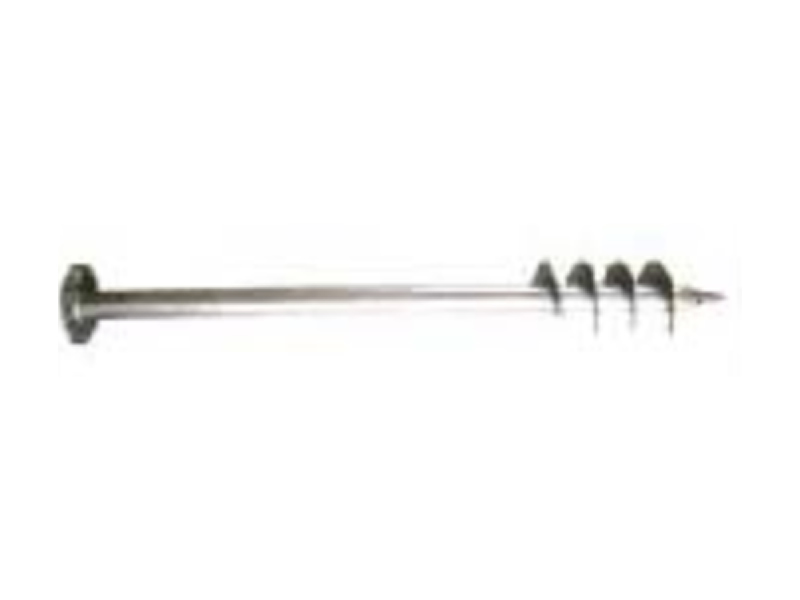
Choosing the Best ground screw for Heavy-Duty Applications
Industry Background and Market Demand
The demand for reliable, cost-effective foundation solutions has grown significantly across industries such as solar energy, telecommunications, and civil engineering. Traditional concrete foundations, while robust, often involve high labor costs, extended curing times, and environmental concerns. Ground screws—also known as helical piles or screw anchors—have emerged as a sustainable alternative, offering rapid installation, reusability, and minimal site disruption.
Heavy-duty applications, including utility-scale solar farms, wind turbine bases, and industrial scaffolding, require ground screws with exceptional load-bearing capacity and corrosion resistance. Market trends indicate a shift toward modular, prefabricated systems that reduce installation time while meeting stringent engineering standards.
Core Concepts and Key Technologies
Ground screws function as deep foundation elements, transferring structural loads to stable soil layers through helical plates welded to a central shaft. Their performance depends on three critical factors:
1. Helical Plate Design: The number, diameter, and pitch of plates determine load distribution and pull-out resistance. Multi-helix configurations are preferred for heavy loads.
2. Torque-Capacity Correlation: Installation torque directly correlates with axial capacity—higher torque indicates greater soil engagement.
3. Soil Compatibility: Screw selection must account for soil type (e.g., clay, sand, or rock) to prevent premature failure.
Product Structure and Manufacturing
Materials
- Shafts: High-strength steel (e.g., S355 or ASTM A500) with hot-dip galvanizing (ISO 1461) for corrosion protection.
- Helices: Laser-cut steel plates with reinforced edges to withstand abrasive soils.
Manufacturing Processes
1. Robotic Welding: Ensures consistent penetration and eliminates weak joints.
2. Post-Weld Treatment: Stress-relieving and shot blasting improve fatigue resistance.
3. Coating: Additional epoxy coatings may be applied for coastal or chemically aggressive environments.
Key Factors Affecting Performance
1. Soil Testing: Geotechnical surveys identify bearing strata and potential obstructions.
2. Installation Precision: Misalignment during driving can reduce capacity by up to 30%.
3. Corrosion Management: Galvanic protection or sacrificial anodes extend lifespan in high-moisture areas.
Supplier Selection Criteria
For procurement teams, evaluating suppliers requires:
- Certifications: ISO 9001, CE marking, or local engineering approvals.
- Testing Data: Third-party load-test reports (e.g., ASTM D3689).
- Customization Capability: Ability to modify helix configurations or shaft lengths for project-specific needs.
Industry Challenges
1. Variable Soil Conditions: Inconsistent strata may necessitate hybrid foundation systems.
2. Supply Chain Delays: Lead times for high-grade steel can impact project timelines.
3. Misapplication: Overestimating load capacity in loose fill soils leads to settlement issues.
Applications and Case Studies
- Solar Farms: A 50 MW project in Spain reduced installation time by 60% using galvanized multi-helix screws.
- Telecommunication Towers: Ground screws enabled rapid deployment in permafrost regions where concrete was impractical.
- Boardwalks: Coastal installations in Florida utilized stainless-steel screws to resist saltwater corrosion.
Future Trends
1. Smart Screws: Embedded sensors to monitor load and corrosion in real time.
2. Composite Materials: Fiber-reinforced polymers for lightweight, high-strength alternatives.
3. Automated Installation: AI-guided rigs to optimize torque and alignment.
FAQ
Q: How do ground screws compare to concrete in terms of lifespan?
A: Properly coated screws last 50+ years, matching concrete but with lower maintenance.
Q: Can screws be reused?
A: Yes, they can be extracted and redeployed, reducing waste.
Q: What’s the maximum load capacity?
A: Heavy-duty models exceed 200 kN, but soil testing is essential for accurate sizing.
By prioritizing material quality, soil analysis, and precision engineering, stakeholders can leverage ground screws to achieve durable, cost-efficient foundations for demanding applications.
Cangzhou Yangkang is a professional supplier in the photovoltaic and infrastructure fields, focusing on the R&D and production of Ground screws (helical ground anchors), Photovoltaic (PV) Mounting Systems, Bolts, Fence caps, Wire Mesh and other products.

About


Copyright © 2022 Cangzhou Yangkang Trading Co., Ltd
SitemapMain business area: Huanghua Cangzhou CHINA
This website uses cookies to ensure you get the best experience on our website.



 Phone
Phone
Comment
(0)